

Creative botany in 1:32
In the current issue, we show how medium-sized plants, from ornamental plants to weeds, can be made from common materials and kits. To a certain extent, the article was planned „long in advance“ and had a long lead time, even by our standards. This was partly due to the abundance and variety of materials. We were able to draw on a fairly extensive stock from earlier H0 times, supplemented by purchases of newer products.
It's simple in itself. If you know how and with what you can make such plants. It only takes a few minutes to make a single plant. A presumably lucrative small series production would be feasible. But this had to be found out first. Despite a pre-selection in which obviously unsuitable plants were discarded, there was still an abundance of materials that took up a lot of time and, in the final phase, up to three workstations simultaneously. Some plants succeeded at the first attempt, other attempts were discarded. Apart from two or three examples, nothing is shown in the article that did not lead to success.
In the meantime, we have come across other products in unexpected places outside the industry that are probably largely unknown and also lead to good results - quite delightful, more on this shortly.
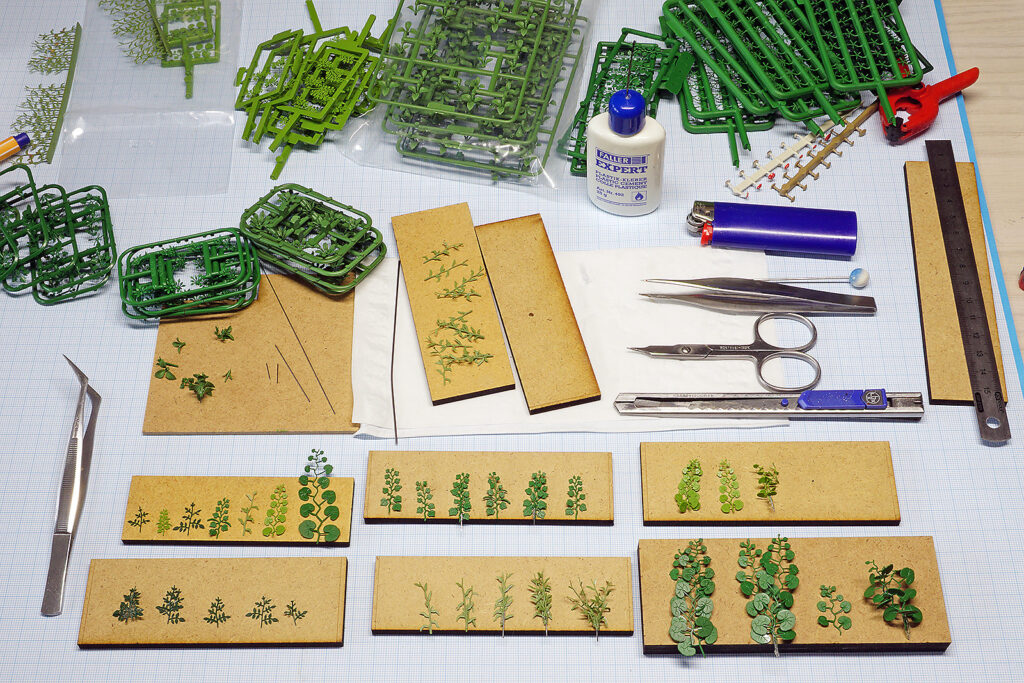
The plastic bush plants were still very organised. Various plants are laid out on the small boards ready for the step-by-step photos shown in the booklet.

Some of the pieces laser-cut from thin paper are extremely delicate and proved to be very fragile when they were cut out.
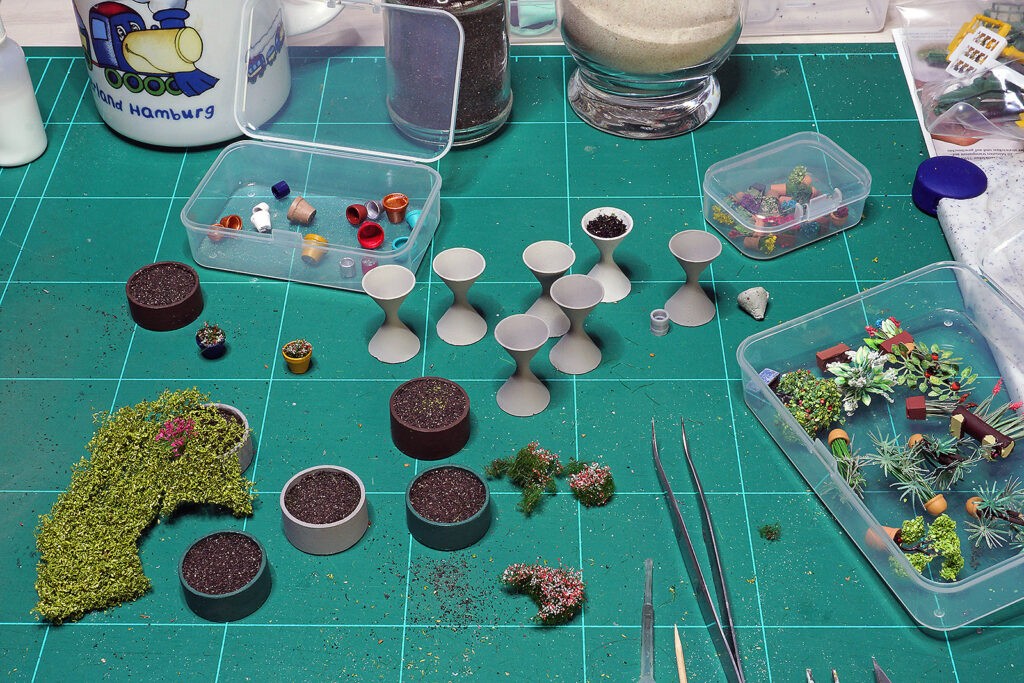
At another workstation, the flower pots and tubs were processed, coloured and partly filled with soil.
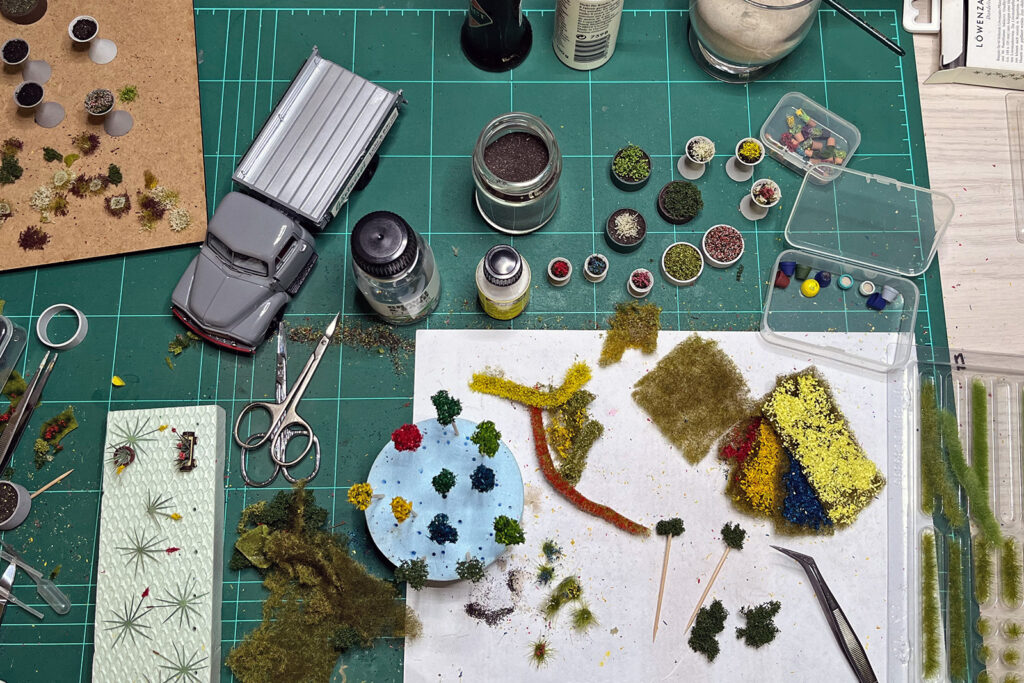
They experimented with a wide variety of materials in order to „grow“ all kinds of plants to a scale of 1:32.
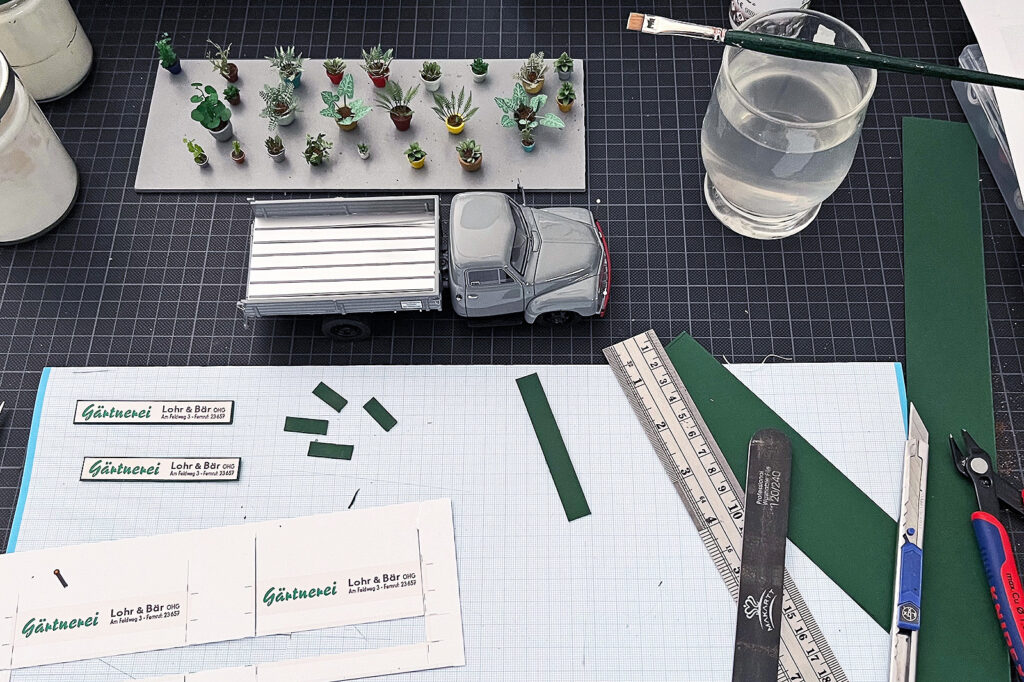
The Opel Blitz from Mo-Miniatur was given advertising signs in keeping with the theme. Above you can see some of the planted pots shortly before the photo was taken.

Finally, a small number of the flower pots were placed on the windowsills of the houses. The resulting photos in the booklet show that this makes the buildings look much more realistic.